
When Salisbury Square officially opened in June, it marked the completion of one of the most significant regeneration projects undertaken in Old Hatfield for a generation.
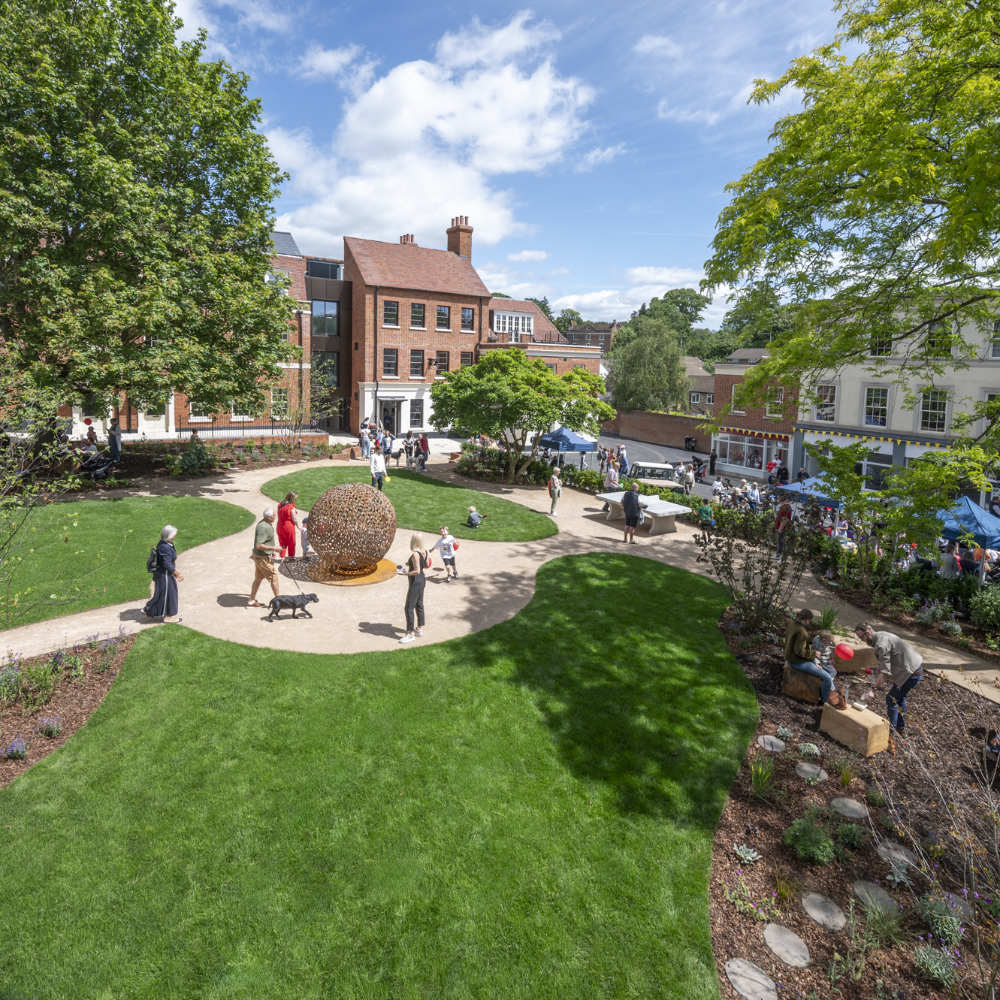
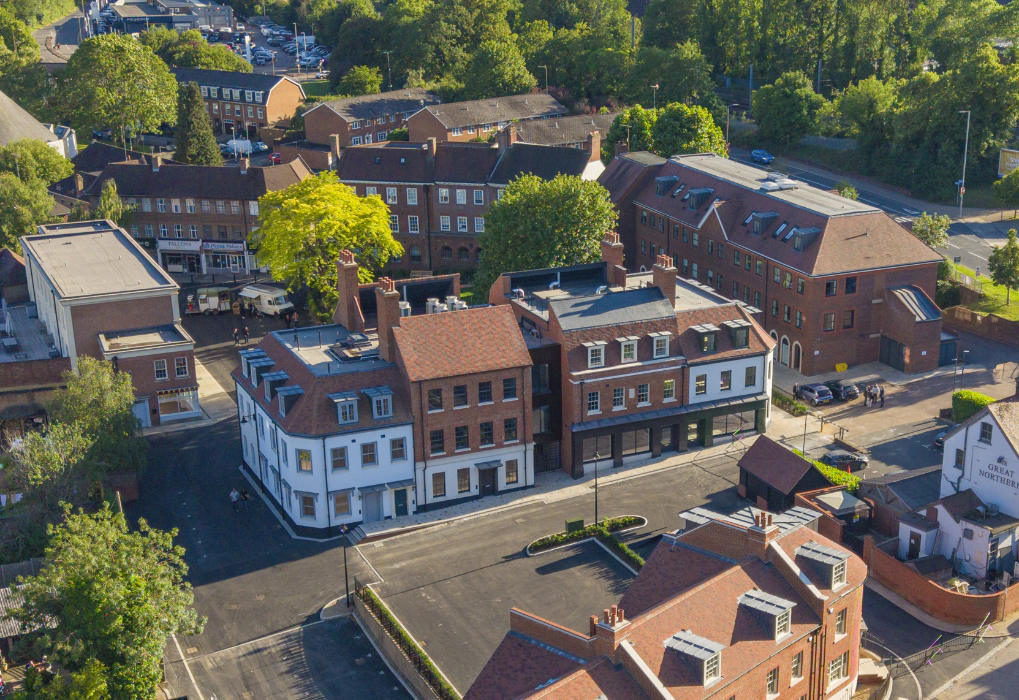
New homes, commercial space and public realm have replaced a tired 1970s development, creating a new focal point for the town and a place designed for people to spend time, meet and reconnect.
For Gascoyne Estates, however, Salisbury Square represents something more fundamental.
According to Jorge Mendonça, Chief Executive of Gascoyne Estates, one of the most remarkable things about Salisbury Square is that it was actually built at all.
“No commercial developer would have touched that project,” he says.
It is a striking statement, but not for the reason many might assume.
Jorge is not suggesting the development lacked merit – or criticising commercial developers. Instead, he is acknowledging the commercial realities that shape much of the development industry.
“Commercial developers have to achieve a significant return in order for them to put their capital at risk,” he explains. “Planning risk and construction risk cover a multitude of pitfalls and issues. If you’re going to put your money and your reputation at risk, you’ve got to know that the reward at the end is worthwhile.”
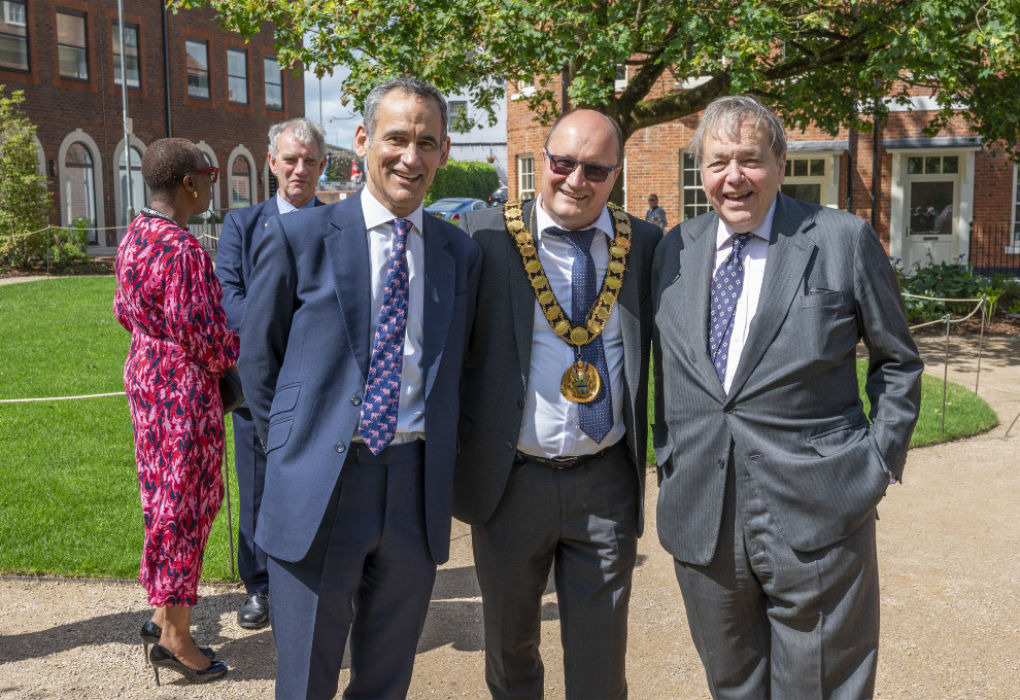
Jorge Mendonça, the Mayor of Welwyn Hatfield, Councillor Michal Siewniak, and Lord Salisbury at the opening of Salisbury Square.
Choosing a different path
Five years ago, Salisbury Square simply did not stack up.
“The total cost of the project exceeded the amount it would have been worth on the day it was completed,” Jorge says. “If we developed on that basis, we would lose millions on the day we achieved practical completion.”
Rather than abandoning the scheme, Gascoyne Estates chose a different route.
The project was redesigned, not to reduce its ambition, but to make it financially viable while preserving the outcome that mattered most.
“It was redesigned and rethought such that the same outcome – the same effect on the community and the place – could be delivered within a budget which sort of breaks even,” he says. “A commercial developer needs a return. We decided, with a combination of commitment and our long-term view, that breaking even was just about good enough to proceed.”
Building lasting value
That long-term perspective reflects the role Gascoyne Estates plays within Old Hatfield.
“Our purpose is growing lasting social and commercial value,” says Jorge. “I put them in that order. But we’re not a charity, so the commercial bit’s important.”
That distinction matters.
Salisbury Square was never about ignoring commercial reality. It was about recognising that success could be measured over decades rather than on the day construction finished. And it was that philosophy that shaped every stage of the project.
The budget was tightly controlled from the outset, with rigorous project management and a determination not to allow the scheme to drift.
“If you start changing the scope and changing your mind about what it is you want to deliver, that’s where projects start to unravel financially,” Jorge says. “So we locked the scope down.”
Quality, meanwhile, was never treated as an optional extra.
Rather than value-engineering materials as the project progressed, Gascoyne Estates established a clear design code from the beginning, ensuring that quality was designed in rather than added later.
That helped avoid what Jorge describes as “optimism bias” – the tendency to assume each element can be delivered for slightly less, only to discover later that those assumptions were unrealistic.
“There are ways of delivering a good quality outcome,” he says. “But you have to use your imagination and ingenuity sometimes, not just throw money at it each time.”
“We are delivering something that will last,” says Jorge.
The spaces between buildings
That approach extends far beyond the buildings themselves.
For Gascoyne Estates, successful regeneration relies just as much on the public realm surrounding them.
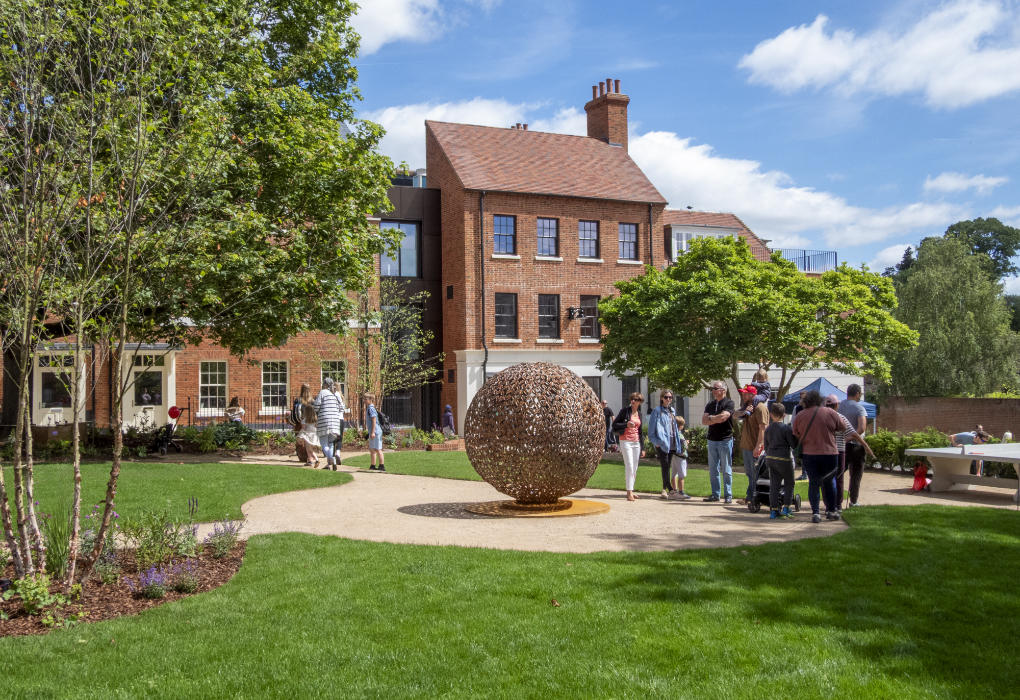
“I think it’s reasonably well documented in the placemaking world that the space, the buildings and the gaps between them affect people’s mood,” Jorge says. “You can make a nice building, but you have to have the gaps between the buildings and the space around them designed with equal care.”
That thinking is already visible at Salisbury Square.
Shortly after the opening, Jorge returned to Salisbury Square and found something that had been missing for years.
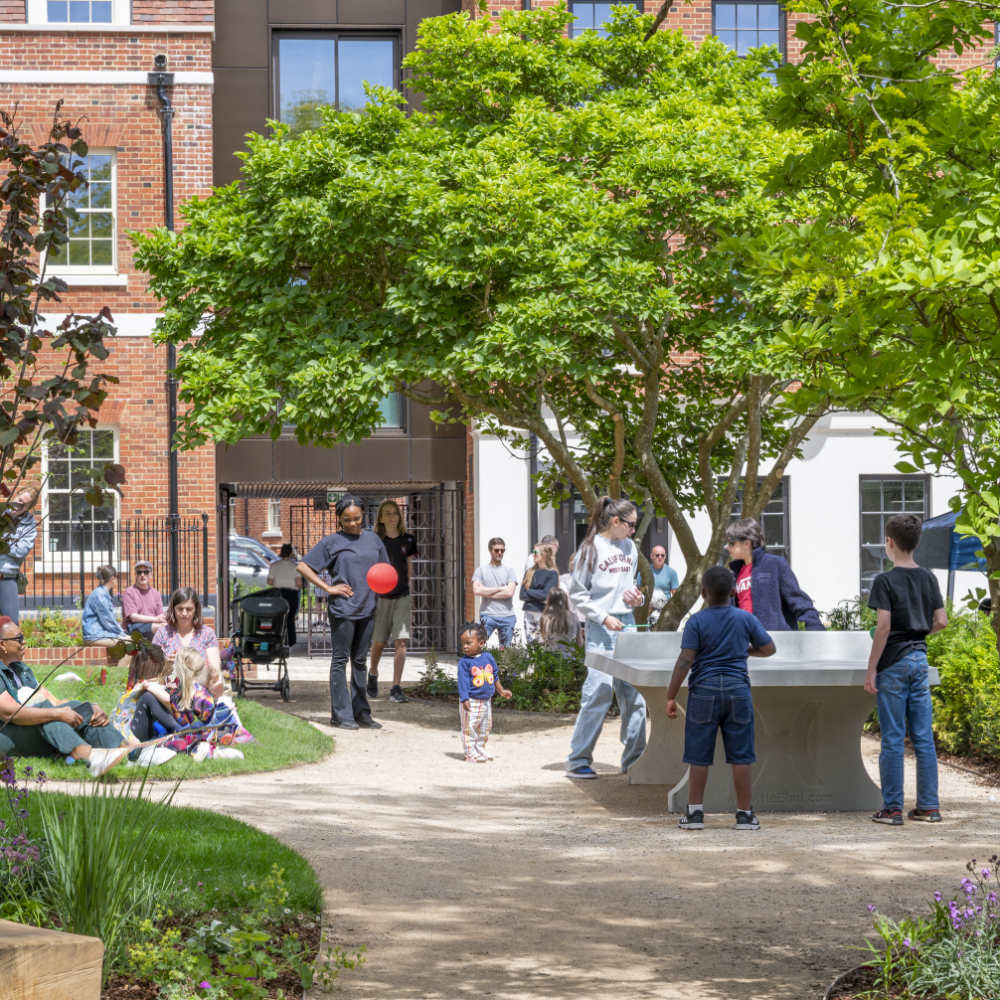
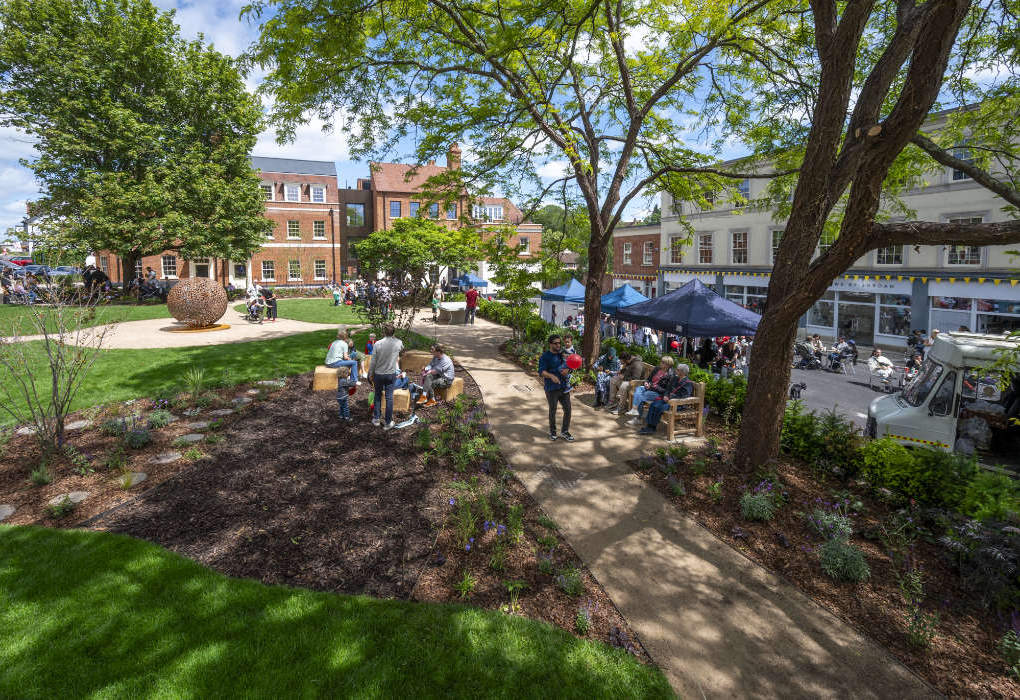
“I absolutely loved the fact that I could see people just walking around and taking in the square,” he says. “Previously, the square was dead. Literally dead. Now people were simply spending time there. That’s not the be-all and end-all, but it’s the start of something.”
For Gascoyne Estates, that “something” has always been the wider ambition.
Community consultation stretching back many years helped shape the principles behind the development, identifying what local people wanted from the space rather than trying to satisfy every individual suggestion.
“You have to take the essence of what people are after,” Jorge says. “A place to be. Somewhere to spend time. Green space. Permeability.”
Creating a halo effect
The same philosophy will influence the businesses that will occupy Salisbury Square.
“It’s not just a case of letting the space to whoever offers the most interesting rent,” he says. “If you want to take one of those spaces, you’ve almost got to prove that you’re going to be contributing to the whole in a good way.”
That careful curation reflects a belief that successful places create their own momentum.
Beautiful buildings, thoughtful public spaces, vibrant independent businesses and an active community all reinforce one another, creating benefits that extend well beyond the boundaries of the development itself.
“If you get it right,” Jorge says, “we expect there to be a halo effect.”
Ultimately, however, the measure of success for Salisbury Square will not be found in occupancy rates or development appraisals. Instead, it will be found in how Old Hatfield feels.
“I hope that in five years’ time people say the best thing that happened to Old Hatfield was the Salisbury Square development,” Jorge says. “They have more interaction with each other. They feel proud that people want to come and visit. They feel lucky enough to live there.”
For Gascoyne Estates, that has always been the objective. Salisbury Square was never simply about replacing one group of buildings with another. Instead, it was about creating a place that feels as though it belongs to Old Hatfield; somewhere that respects its history while giving the town renewed confidence in its future.
Projects like that are rarely straightforward – and many developers would have looked at the risks and walked away.
Gascoyne Estates looked at the same challenges and saw an opportunity to invest in something that could serve Old Hatfield for generations to come.
Opening a new chapter
Salisbury Square is now open, but its role in Old Hatfield is only just beginning.
The Farmers Market, public events, new occupiers, office workers, residents, visitors and local businesses will all help shape what the square becomes over the coming months and years.
For Jorge, its importance lies in the way it can help Old Hatfield recover something of its former energy while remaining true to its character.
“The word transformation is perhaps overused,” he says. “In this case, I think it’s appropriate.”
Salisbury Square, he believes, will transform Old Hatfield in a way that feels rooted in the place itself.